
The Shad Plank is conducting a poll about the effect of endorsements on your vote. Yes, I voted in the poll. My choice was “I don’t pay attention to endorsements,” which, as of this writing, is the most popular: 61% of respondents have chosen it. But the fact that some people’s votes are influenced by endorsements is the reason candidates pursue them. After all, the goal is to get to 50% +1 – and whatever can help you get there is worthy of going after.
I was surprised to see seven percent of those who have participated in the poll choose “endorsements from other politicians.” Really? Democrats endorsing Democrats or Republicans endorsing Republicans seems, well, so self-serving. Even crossover endorsements usually have some baggage associated: rare is the case where a sitting elected from one party endorses someone from the opposite party, unless they happen to be upset with the candidate of their own party for one reason or another. Retired politicians are more likely to endorse someone of the opposite party, but given the very nature of politicians – read ego – even those endorsements are suspect.
Which brings me to two former Virginia governors: Linwood Holton and Doug Wilder.
 Tuesday, Holton, the first Republican governor since Reconstruction and the father-in-law of current Democratic governor Tim Kaine, endorsed Creigh Deeds. Holton was the 61st governor of Virginia, having served from 1970 to 1974. Personally, I only know his name from the history books. His Wikipedia entry paints him as a moderate Republican. Interestingly enough, the motto of his 1969 gubernatorial campaign was “It’s time for a change.”
Holton was a Republican when Republicans were in the wilderness in Virginia. His involvement in the party goes back to the 1950s. By today’s standards, though, he probably would be considered a Democrat. This is a man who put his children in public schools, then 85% black, during the height of racial tensions over desegregation and busing. His successor was Democrat-turned-Republican Mills Godwin, a supporter of Massive Resistance. Holton also came out against the Marshall-Newman Amendment in 2006.
Even so, had this been the first time Holton endorsed a Democrat, the endorsement might mean something. Unfortunately, it is not and it does not. Holton’s first Democratic endorsement was that of Kaine, in 2005 the 2001 Democratic ticket, comprised of Mark Warner for governor, Kaine for LG and Donald McEachin for AG. He followed it up with an endorsement of now President Obama, in 2008. While it is true that Holton served as a Republican governor, the length of time since his service and his endorsements in the meantime, make me question the value of his endorsement.
One thing I will say about Holton: his motive for endorsements doesn’t appear to be related to his ego.
Unfortunately, the same cannot be said for Wilder.
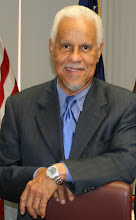 Wilder, the 66th governor, served from 1990 to 1994. He was the nation’s first elected black governor, and the second to have served in that position. I’m not sure at what point Wilder as a politician came into my consciousness; I was certainly aware of his run for LG in 1985 but only vaguely so.
Wilder, like many of Virginia’s governors, was a moderate. He was praised during his tenure for his sound fiscal policies. His election by such a slim margin, despite the fact that polls showed him having a commanding lead, coined the use of the term “the Wilder effect” in political circles.
He considers himself a Democrat, although if the truth be told, he’s of the party of Wilder. This article points out the many times that Wilder has worked to stymie the efforts of Democratic candidates. His actions as mayor of Richmond have been legendary.
That Wilder has an oversized ego should be of no surprise to anyone who follows politics. I have a problem, though, when people pander to that ego. President Obama should have never tried to influence him. If Governor Kaine wanted to give it a shot, it should have been done behind closed doors, although it certainly would have come out. Pursuing his endorsement was a no-win situation for Deeds. I just don’t see how a Wilder endorsement would have helped Deeds – certainly not nearly as much as it would help Wilder. And that includes helping him get the black vote, as I pointed out earlier.
One other thing: Wilder was campaigning for governor at the same time Bob McDonnell was writing his thesis. Those who claim that the latter is irrelevant have to also admit that is true for the former. I’m of the opinion that the thesis itself, while shocking, is not relevant. It is the implementation of it over the intervening years that is. When I look at Wilder over the same period, I applaud him for having sheparded Virginia through difficult economic times. After that, just what has he done?
At the end of the day, I would hope that voters do their own research on the candidates and their positions, and not rely on the endorsements of others. As for these two in particular, I just don’t see the value of either one.
 VIVIAN J. PAIGE | All Politics is Local
Very well written, but allow me to be your editor:
Change giving to given and t0 to to.
Had the hardest time finding that t0. Didn’t show up in the editor. And given my many interruptions while writing this, it’s a wonder there weren’t more errors 😦 Thanks
You’re welcome. And as always, just delete these comments. The point is to remove distractions (the misspellings), not add more.
Great article, this is by far the most educational blog in local politics.
Thanks, Max.
Great article. I bet a zillion dollars you wouldn’t have written that before the Holton and Wilder endorsements and a gazillion dollars it would’ve been written differently if they endorsed differently.
Well, you’ll never know for sure, right? But you have to admit that prior to the Wilder non-endorsement, I was already pretty hard on him.
Another editorial note: Holton actually endorsed the entire Democratic ticket: Warner for gov, Kaine for L.G. and Don McEachin for atty. general in 2001. So Kaine in 2005 wasn’t his first endorsement of a Democrat.